


Process scheme of rubber wood preparation
With increasing demand for sustainable timber, the rubber wood production line has become an efficient and eco-friendly solution. Rubber wood must be processed quickly after harvesting due to its susceptibility to fungi and insects, making a well-designed rubber wood treatment process essential for quality assurance.
1. Product Description
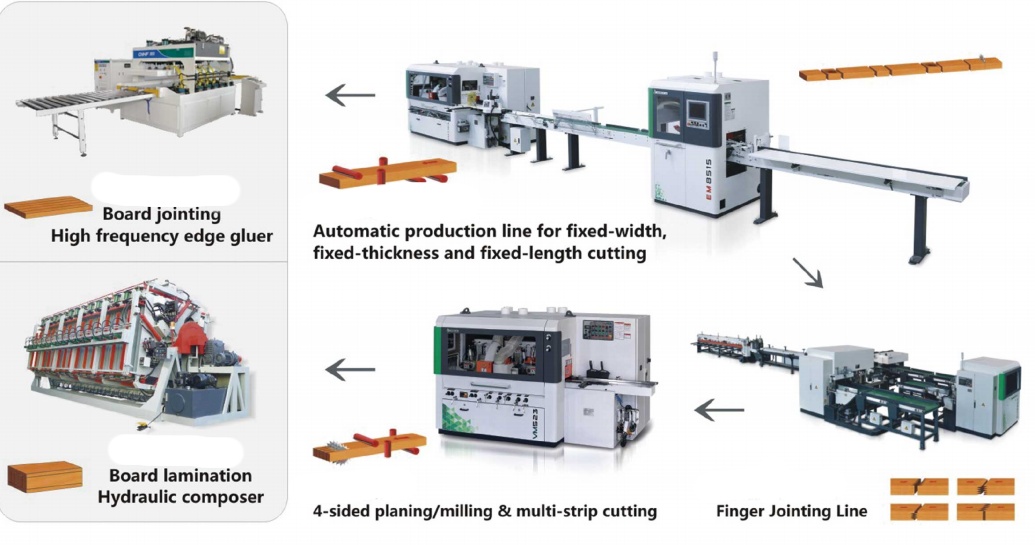
The rubber wood preparation process scheme provides a complete solution for processing raw rubber logs into usable lumber and panels. The typical workflow includes:
(1) Log Cutting & Selection
Rubber wood logs are selected and cut into required sizes for further processing, ensuring optimal material utilization.
(2) Debarking & Cleaning
Using a rubber wood debarking machine, bark and impurities are removed to improve product quality and protect downstream equipment.
(3) Sawing & Sizing
Logs are processed through a rubber wood sawmill line, where they are cut into boards or blocks according to production requirements.
(4) Drying Process
The wood is dried in a rubber wood drying kiln to reduce moisture content, ensuring dimensional stability and preventing deformation.
(5) Preservation Treatment
A rubber wood preservation treatment system is applied to enhance durability and resistance to insects and decay.
(6) Sorting & Storage
Final materials are graded, stacked, and prepared for further use in panel or furniture production.
This complete rubber wood board processing line ensures high efficiency, automation, and consistent product quality.
2. Product Features & Advantages
The rubber wood processing line offers the following advantages:
- High Efficiency: Automated systems improve production capacity and reduce labor costs
- Stable Quality: Integrated drying and rubber wood treatment process ensures consistent moisture control
- Eco-Friendly Solution: Rubber wood is a sustainable material widely used in modern industries
- Flexible Configuration: The automatic rubber wood processing line solution can be customized
- Durability Enhancement: Advanced preservation improves resistance to fungi and termites
Additionally, optimized sawing and drying processes significantly improve yield and reduce waste during production.
3. Applications & Use Cases
The rubber wood preparation process is widely used in:
(1) Furniture Manufacturing
Processed rubber wood is ideal for furniture due to its stability and smooth texture.
(2) Plywood & Panel Industry
Used as raw material in plywood and blockboard production after veneer processing.
(3) Construction Materials
Suitable for structural components and interior decoration materials.
(4) Packaging Industry
Applied in pallets, crates, and industrial packaging products.
(5) Woodworking Factories
A complete rubber wood production line is essential for modern sawmills and wood processing plants.
Rubber wood has become a valuable industrial material thanks to its versatility and sustainability.
4. Conclusion
The complete rubber wood preparation line integrates cutting, drying, treatment, and sorting into one efficient system. By adopting an advanced rubber wood processing line, manufacturers can significantly improve productivity, reduce waste, and ensure high-quality output.
For businesses seeking a reliable and cost-effective rubber wood manufacturing process, this solution provides the ideal balance between automation, efficiency, and sustainability.


